GB
1936
1hr 06mins
Dir: Bernard Vorhaus
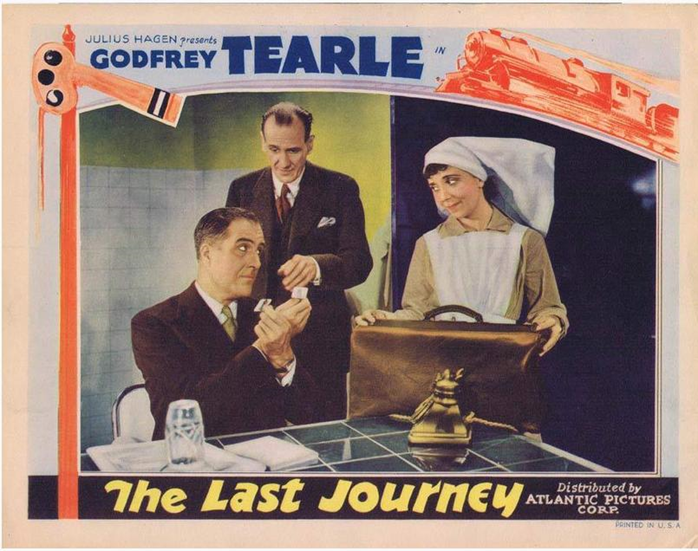
Starring: Godfrey Tearle and Viola Compton
The driver of an express train goes mad with jealousy and plans to kill all in his charge
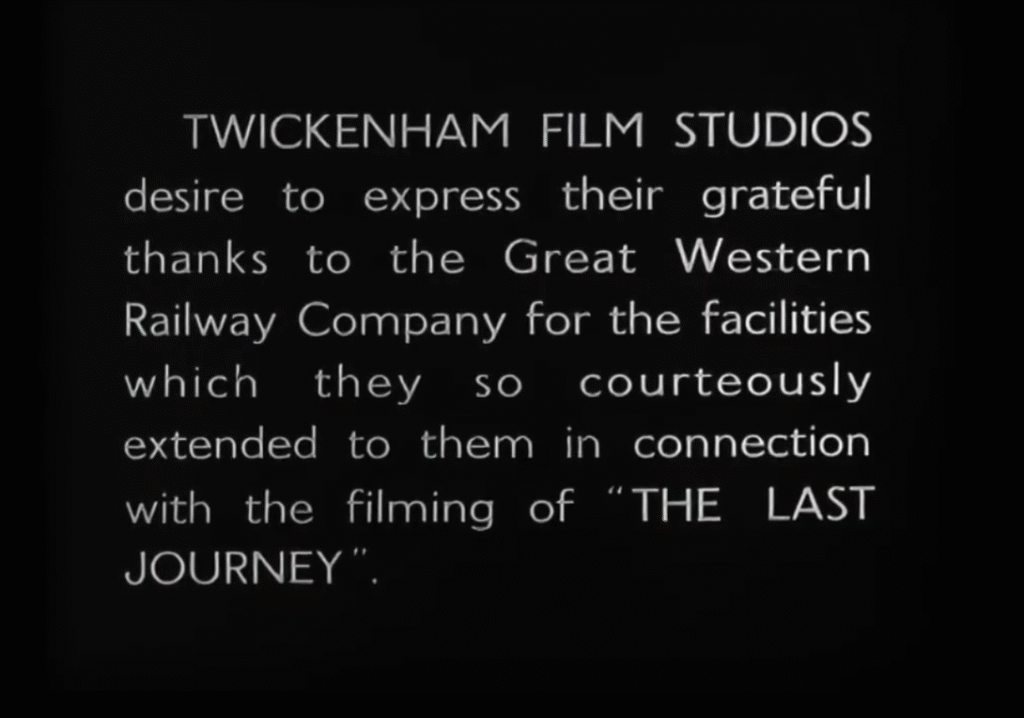
This gripping low-budget portmanteau thriller is badly neglected having lay in obscurity for many years but frequent showings at transport film screenings and critical re-evaluation of Bernard Vorhaus’ work have led to its release on DVD and it is now seen as one of the most exciting and technically well-made railway films of the 1930’s, and there were quite a few to choose from. It takes wholesale liberties with its depiction of common railway practice, comically using sped-up camera work on occasion, and the scene where a signalman diverts a goods train into a loop, moments before it can be hit by the pursuing express has to be seen to be believed, but it is none the less absolutely brilliant, and is one of the best quota-quickie b-movies from the period. The GWR offered full use of facilities, no doubt to heighten their own public image, and the railway scenes completely dominate the entire film. An example of the lengths which the company went to are clear in the opening five minutes when there is a sequence of shots that follow a ‘shunt released’ ‘Saint’ Class 4-6-0 on its way light engine to the servicing facility. Actual footage of the footplate as viewed from the tender and then shots of the loco on the turntable at Ranelagh Bridge loco yard are very good, and gives a taste of what is to come. London Paddington dominates the early scenes, with images of other 4-6-0s departing and arriving and 0-6-0PTs on shunt duties, plus an overview of Ranelagh Bridge servicing facility with at least one 2-6-2T amongst the stabled main line power. Once the express is on its way to ‘Mulchester’ it is clear that something is very wrong as it rushes through booked stops. These scenes were filmed at Slough and West Ealing stations, playing the roles of ‘Homechurch’ and ‘Filby’ respectively. One recognisable location that appears twice in the film is Shooters Hill, between Goring and Pangbourne in the Thames Valley. Much of the action surrounding the chase sequence takes place on the Reading-Basingstoke line, particularly around Bramley. Flmed over a number of Sundays, the route was closed to regular traffic and handed over to the film company for their sole use. Reading depot were clearly not expected to provide the same loco and wagons for every weekend of filming, which is why the motive power of the goods train visibly changes three times. At first, the freight is hauled by a 5700-series 0-6-0PT, then a 2800 Class 2-8-0, and finally a 2251 Class 0-6-0. Later in the film there is some footage taken from a train heading along the Dawlish sea wall, a shot of a train approaching Laira Junction, another passing Laira depot as viewed from the air, and an express hauled by a ‘Hall’ coming of the Royal Albert Bridge at Saltash. The final climax of the film, however, features an extremely rare location in the form of Millbay Docks in Plymouth. This location appears very rarely in photographs so an appearance in film is exceptional to say the least. The very opening pre-credits shot features an ‘over the camera’ run past of a 4-6-0 followed by scenes on the approach to Paddington with other 4-6-0’s obscured by the credits themselves. The GWR locomotives in the film that can be identified include ‘Star’ Class 4-6-0s No.4020 Knight Commander and 4067 Tintern Abbey, ‘Hall’ Class 4-6-0 No.4953 Pitchford Hall (now preserved), ‘Castle’ Class 4-6-0s No’s.5004 Llanstephan Castle, 5013 Abergavenny Castle and 5022 Wigmore Castle, ‘King’ Class 4-6-0 No.6005 King George II, and a very rare shot of a ‘Saint’ Class 4-6-0 No.2980 Coeur de Lion (though a good number of other Saints also appear). The 2251 Class 0-6-0 in charge of the goods is No.2275, which was fairly new at the time. The ubiquitous 0-6-0 Pannier Tank is seen at Paddington on empty coaching stock duties, including a quite rare glimpse of a 9700-series example with condensing apparatus. The footplate and carriage interiors are very detailed sets, made with the assistance of Swindon Works to help recreate their authenticity. All in all, this is a wonderful representation of the 1930s railway system that has all but virtually disappeared. Julien Mitchell plays the role of the train driver, vengeful and full of resentment at having reached retirement age. His last quote in the film requires retelling here – “a steam loco is a faithless hussy that doesn’t care who the master is!”