THE LAST JOURNEY – A PICTORIAL TRIBUTE TO THE 1936 FILM
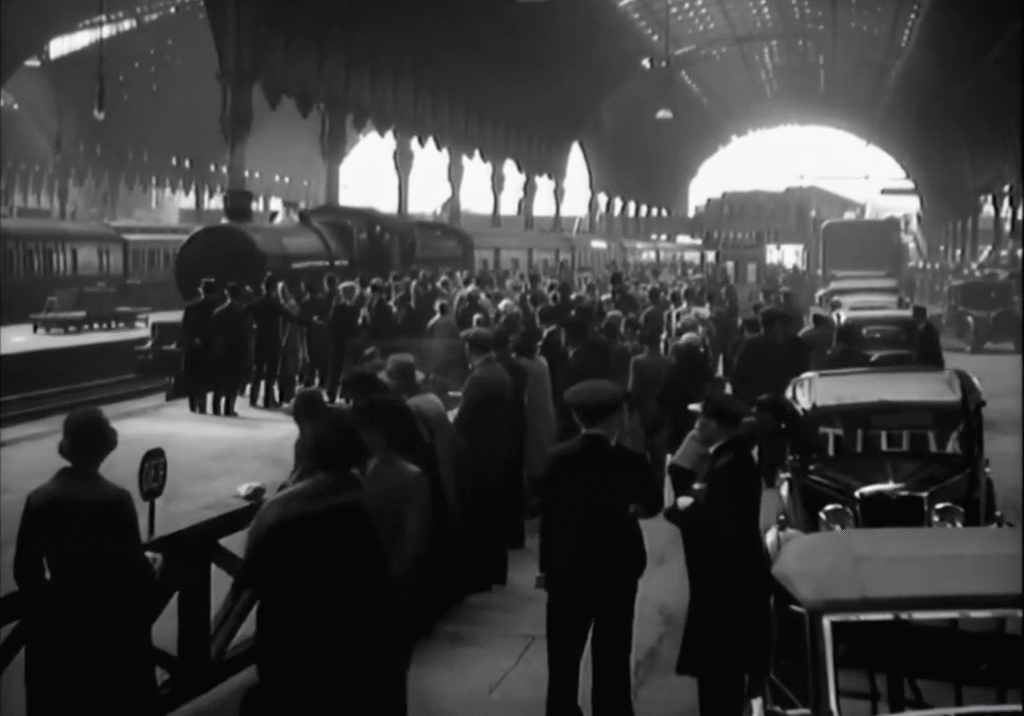
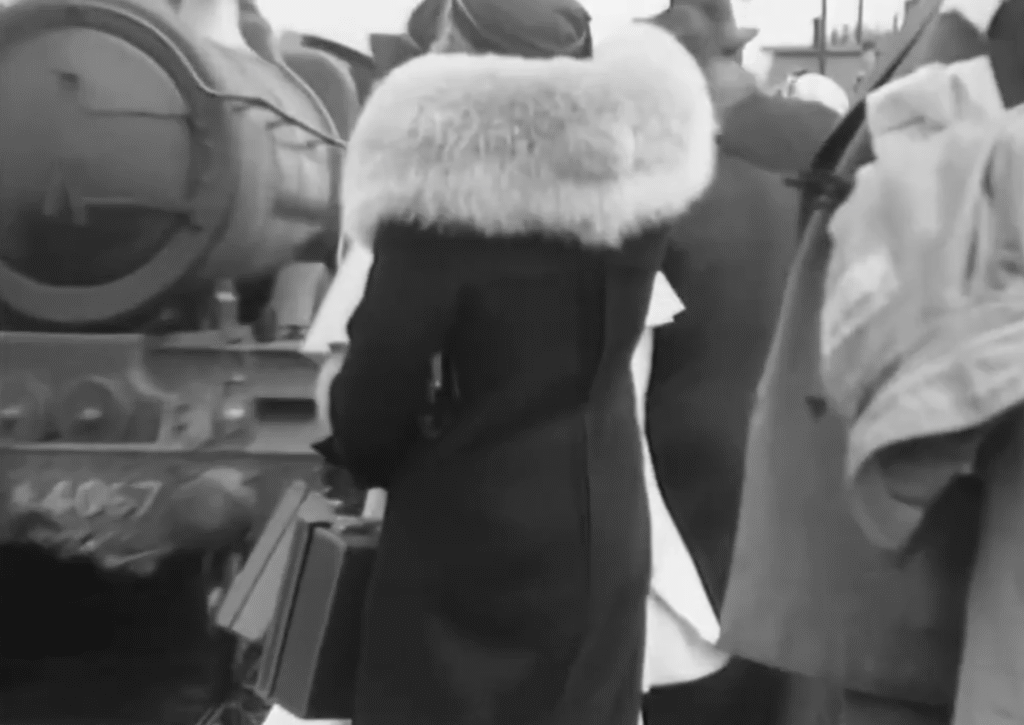
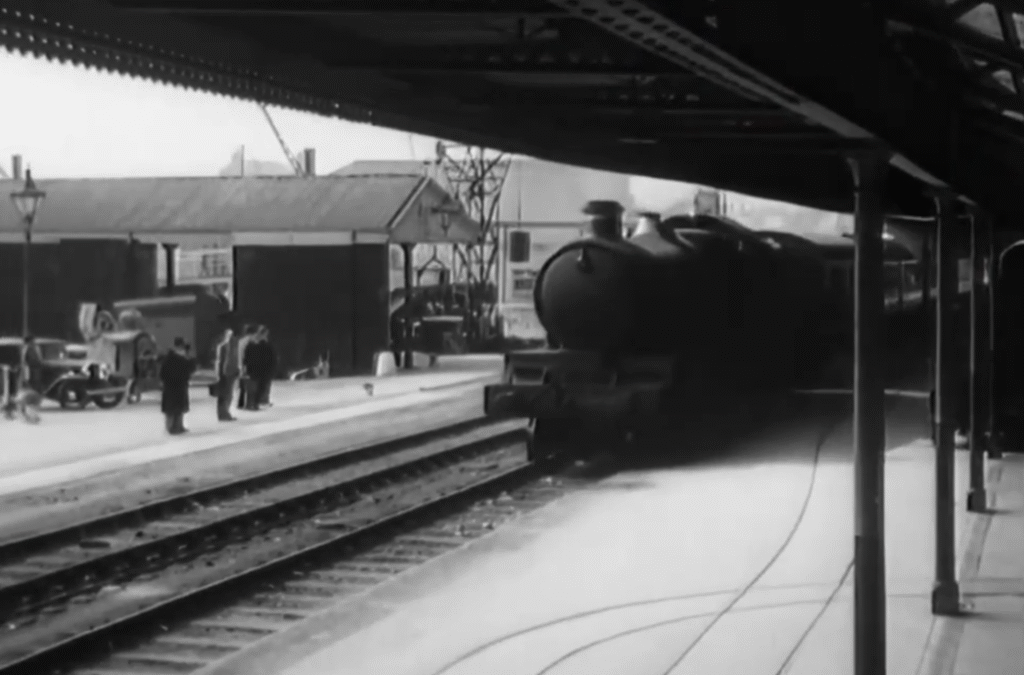
One of the opening scenes features the arrival of a train at a wonderfully atmospheric London Paddington. These were the days when one could still get a taxi from the station’s own taxi rank. The passengers on the platform are largely obscuring the locomotive from view but the heigfht of the tender suggests it is either a ‘Castle’ or a ‘Hall’.
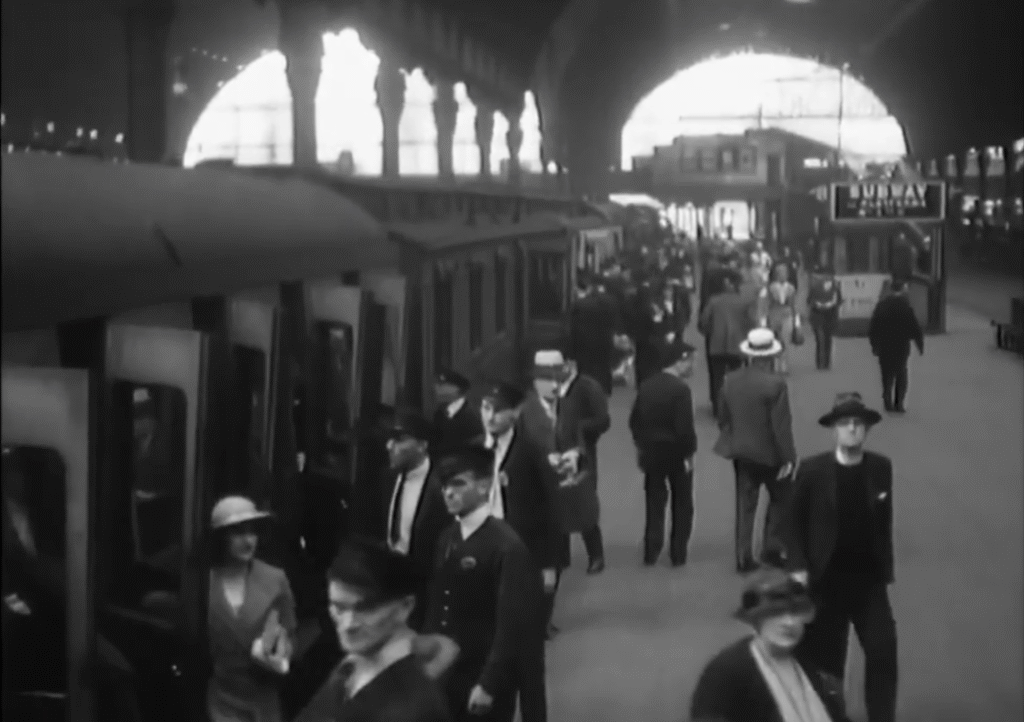
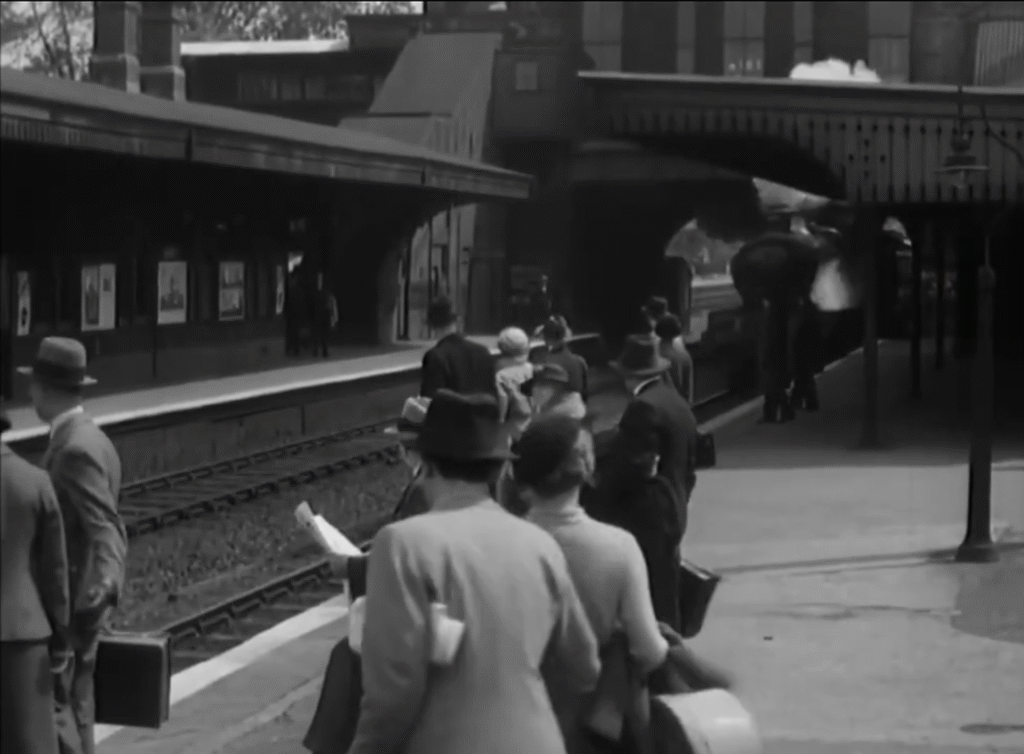
Passengers disembark from the train that has just arrived. Note the vintage Dean clerestory coaches in the formation.
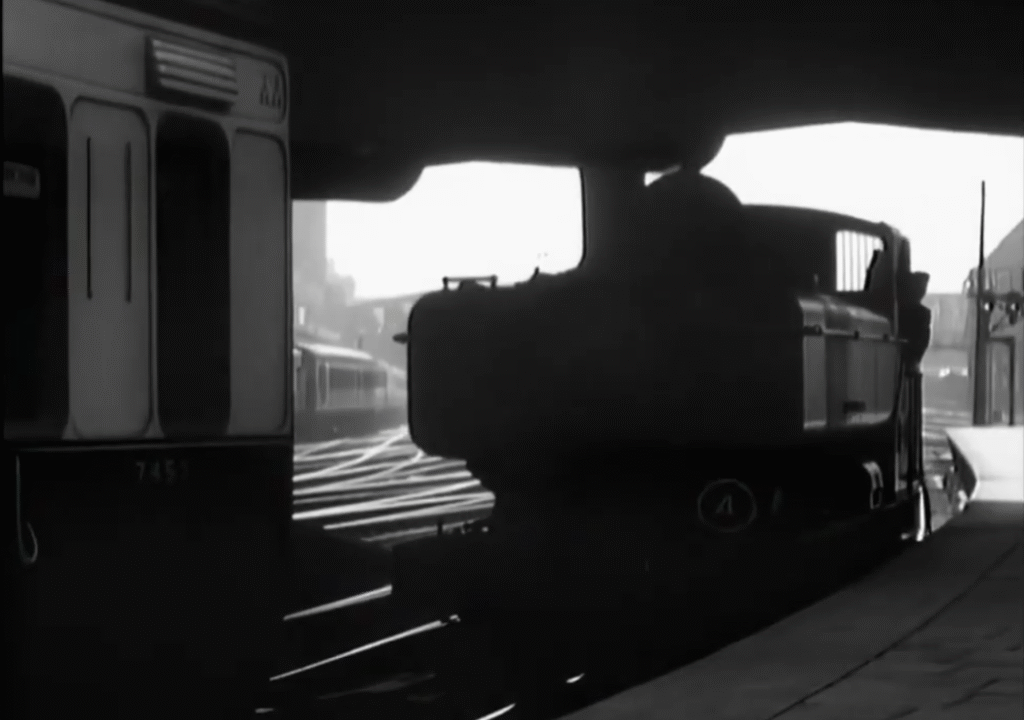
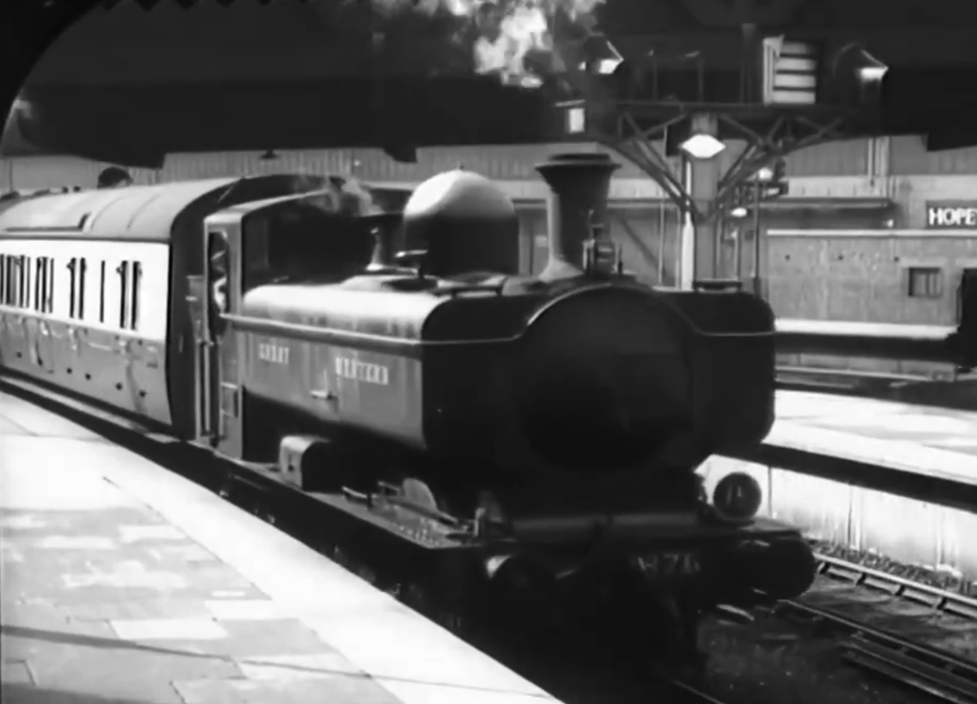
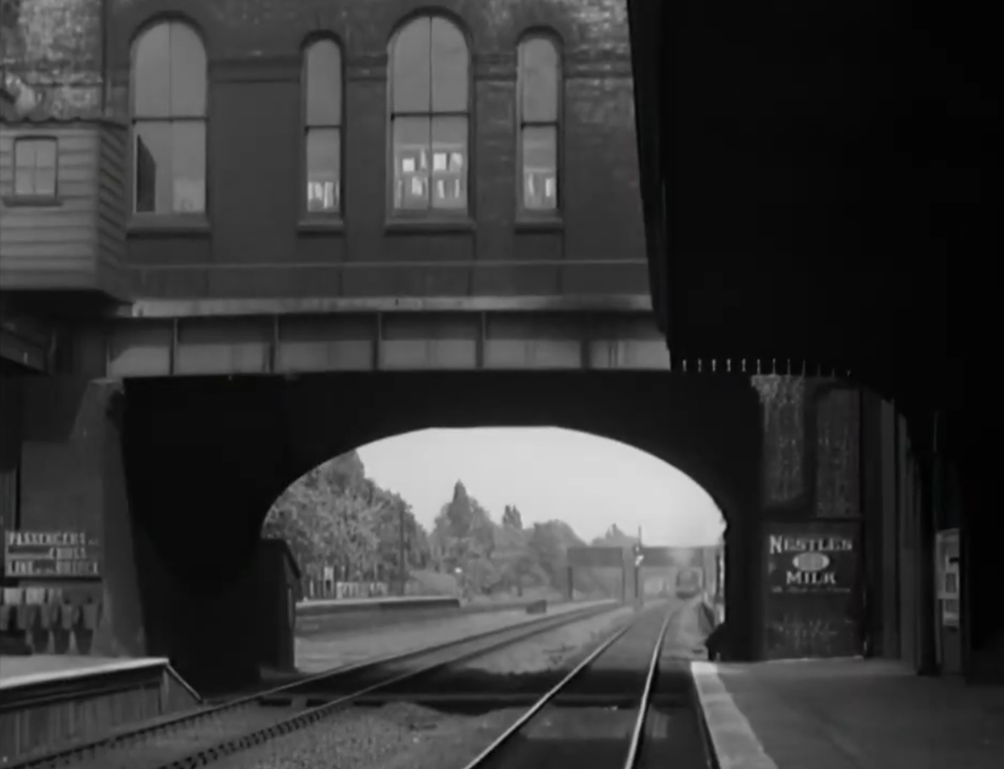
A Pannier Tank on duty 4 in the shade beneath Bishops Bridge. This is the country end of platform 6.
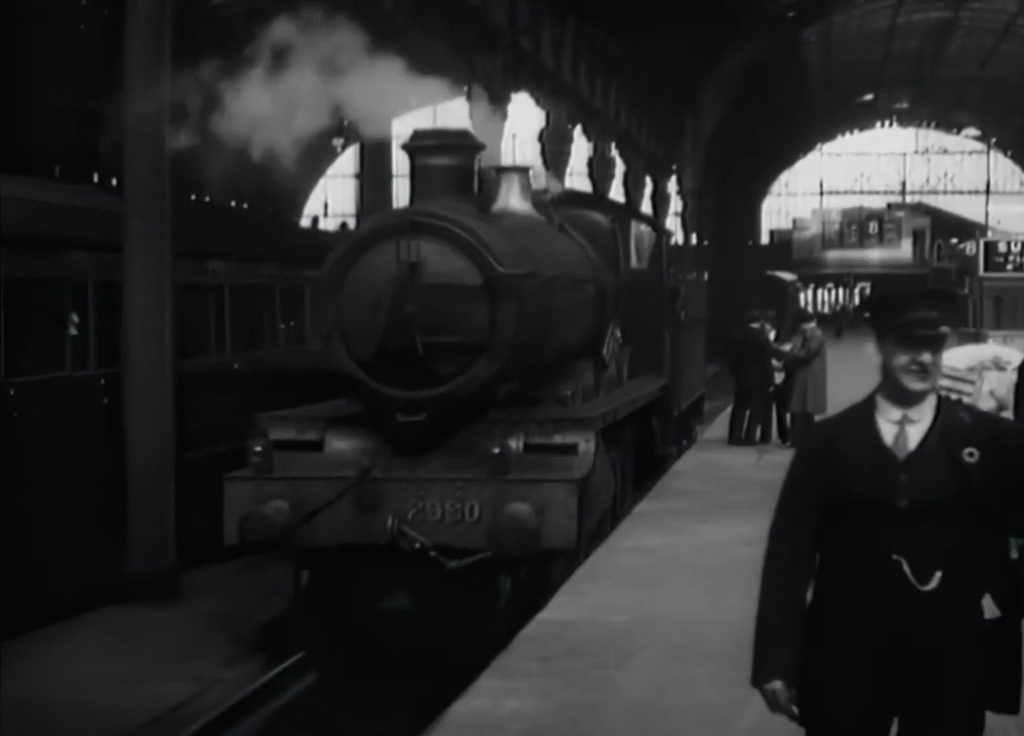
Having been ‘shunt released’, ‘Saint’ Class 4-6-0 No,2980 Coeur de Lion runs out light engine to the servicing facility at Ranelagh Bridge. Shots of ‘Saints’ on film are rare indeed and we should be grateful for such a clear view of one in this film.
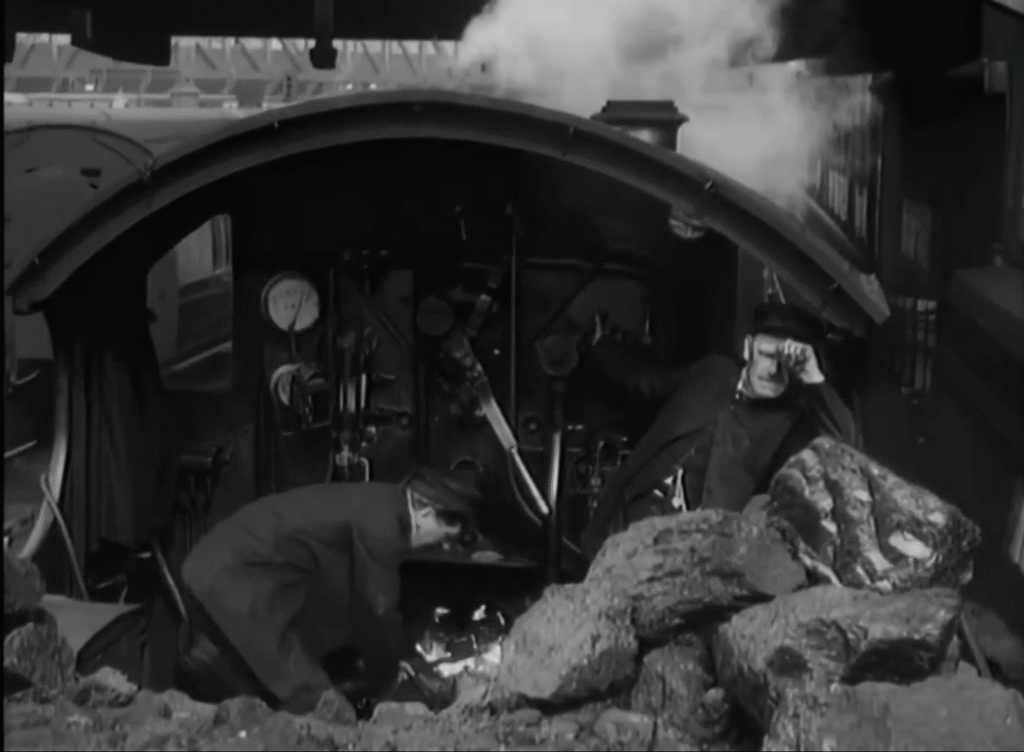
The sequence involving the locomotive running light to be turned at Ranelagh Bridge is fantastic. The driver and fireman are played by Julien Mitchell and Michael Hogan respectively. As they are alone on the footplate, my guess is that this loco was being gently propelled toward the camera by another. Those lumps of coal look awfully big!
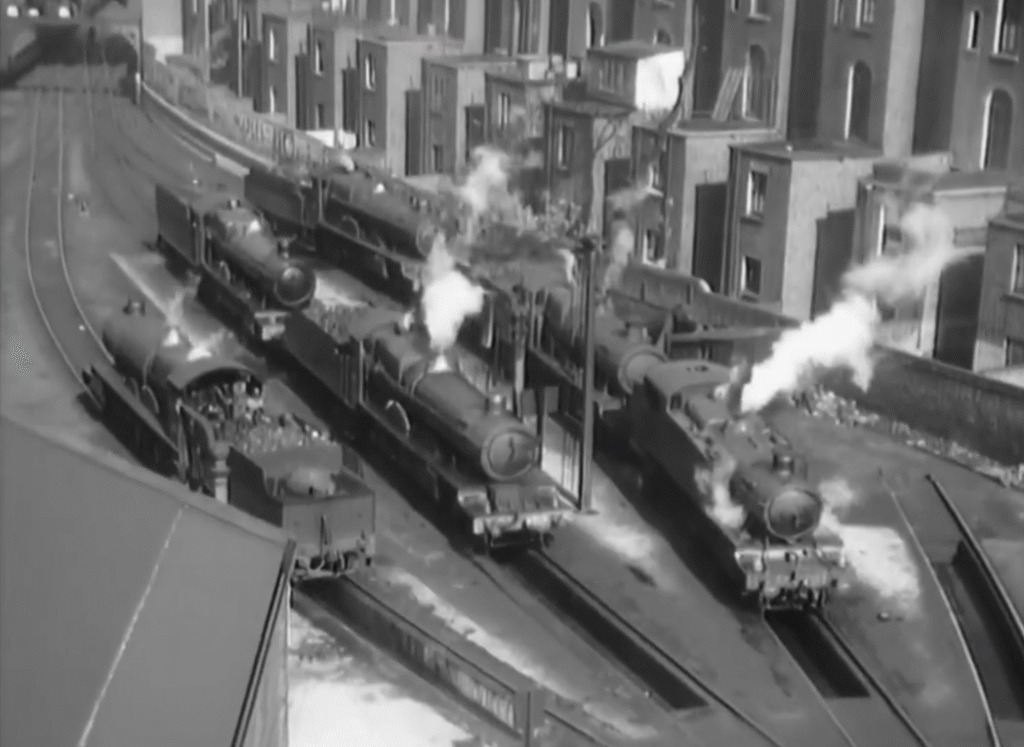
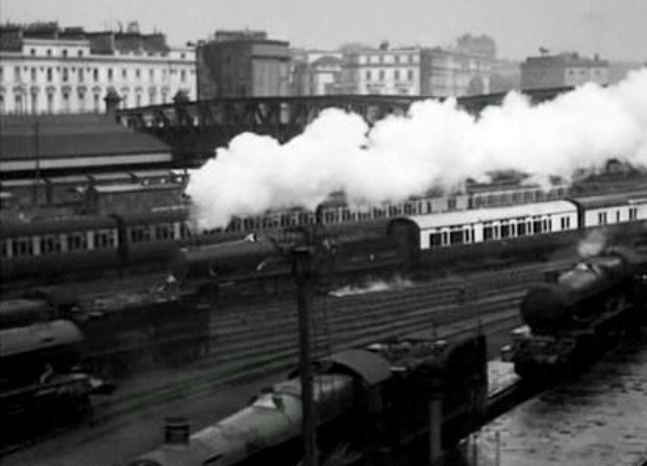
Ranelagh Bridge loco servicing depot. This view was taken from a window of the former Great Western (later British Railways) Records Office and features no fewer than six locomtoives. The small tender 4-6-0s are probably’ ‘Saints’. The large tender 4-6-0 at the back of the middle row is probably a ‘Hall’. Trying not to be overlooked is a 2-6-2 Prairie Tank at the ront of the right hand row. This area is now the staff car park but the tenement blocks on Gloucester Terrace are still standing.
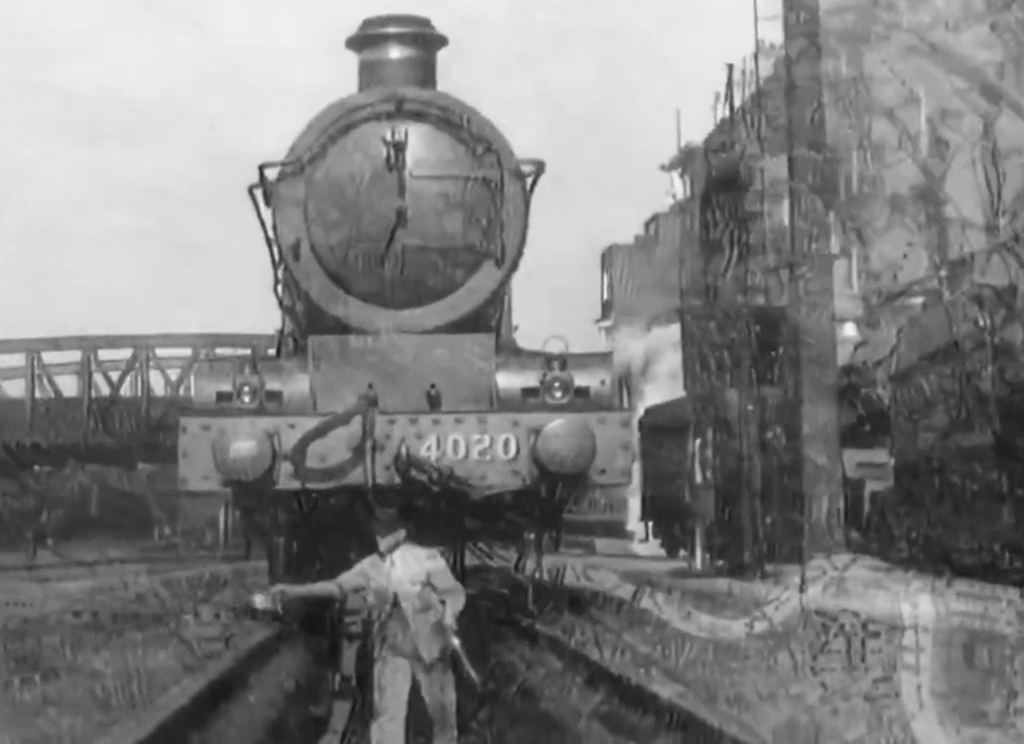
This shot forms part of a montage, hence the grainy appearence. The locomotive is ‘Star’ Class 4-6-0 No.4020 Knight Commander being serviced on Ranelagh Bridge depot, the eponymous structure of which runs across the centre background.
Working duty 15, 5700-series Pannier Tank No.8761 draws the carriages of an express into Paddington’s platform 3.
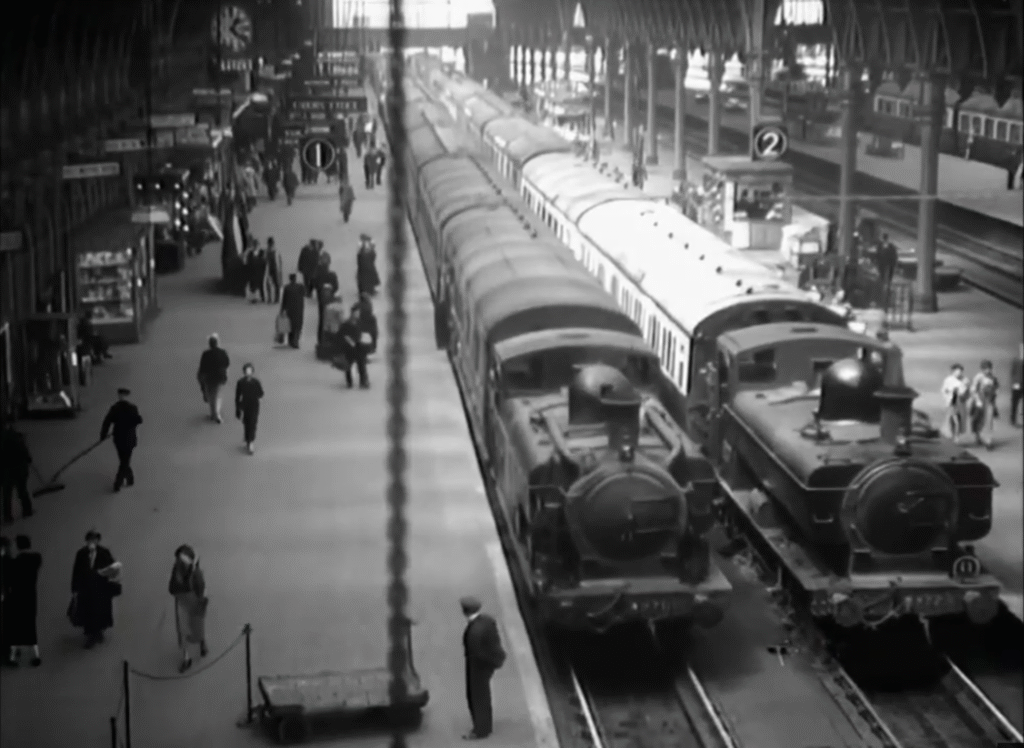
This view of London Paddington shows a pair of 0-6-0 Pannier Tanks ‘on the blocks’. In platform 1 on the left is a very rare glimpse of a 97xx series ‘Condensing Tank’, one of only 11 built for operating meat trains to Smithfield Market on the Metropolitan ‘Widened Lines’ of the Underground system. The Pannier on the right in platform 2 is a more conventional 57xx type. This shot was later reused in The Missing Million (1942).
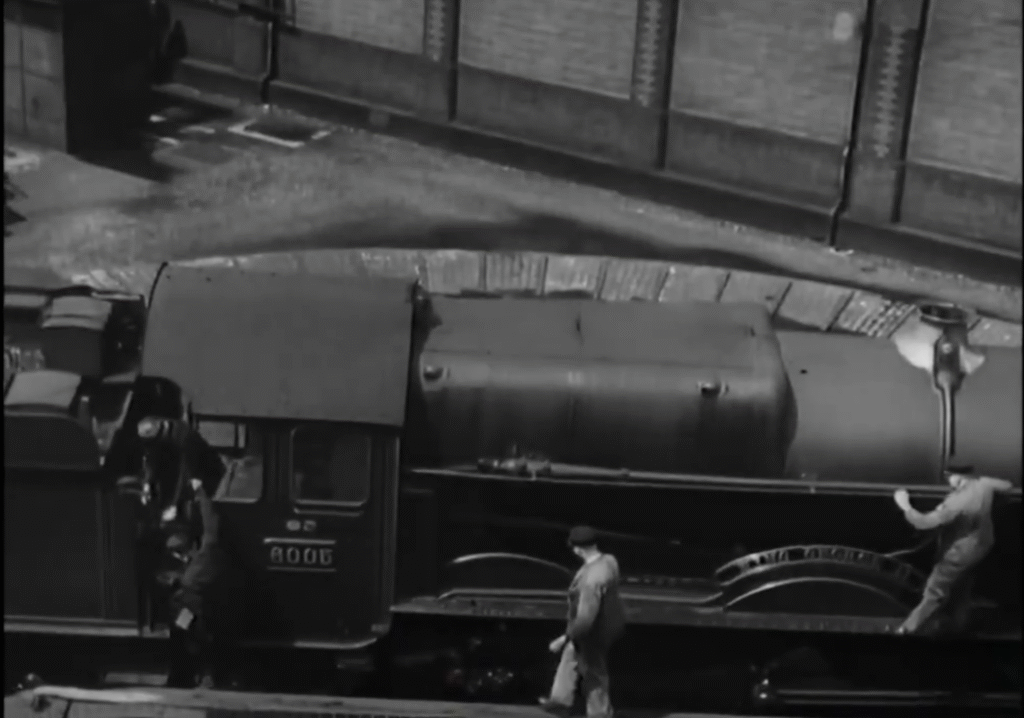
‘King’ Class 4-6-0 No.6005 King George II being turned on the table at Ranelagh Bridge, thus giving the fireman an opportunity to give it a quick polish.
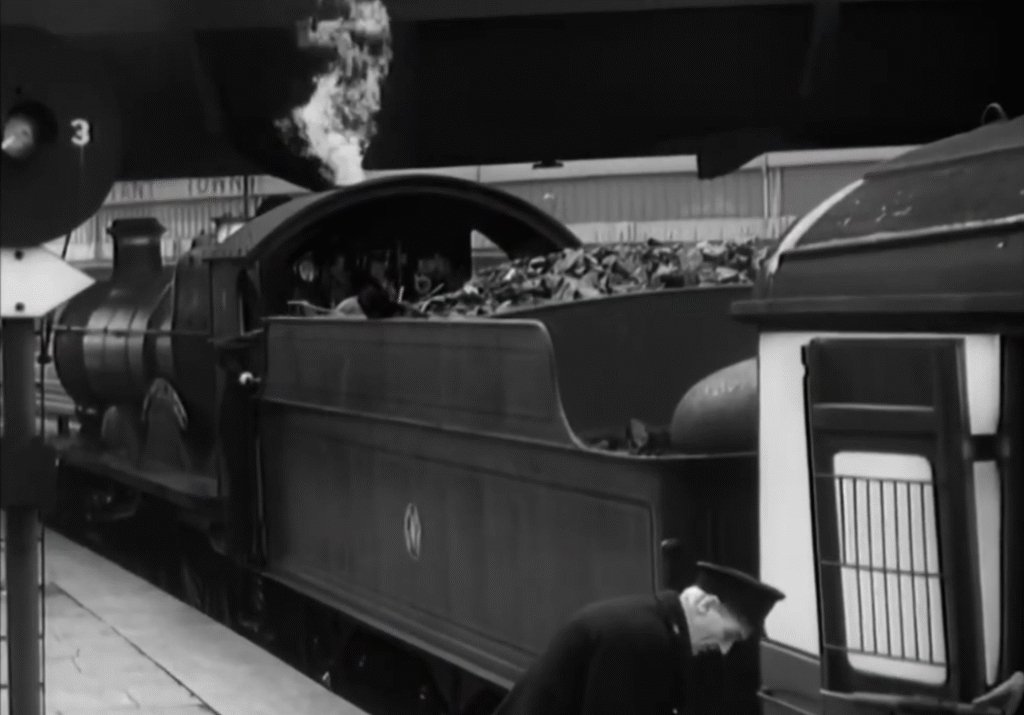
What appears to be another ‘Saint’ has gently backed onto its train in platform 3. Notice the tender displays the short-lived ‘shirt button’ badge.
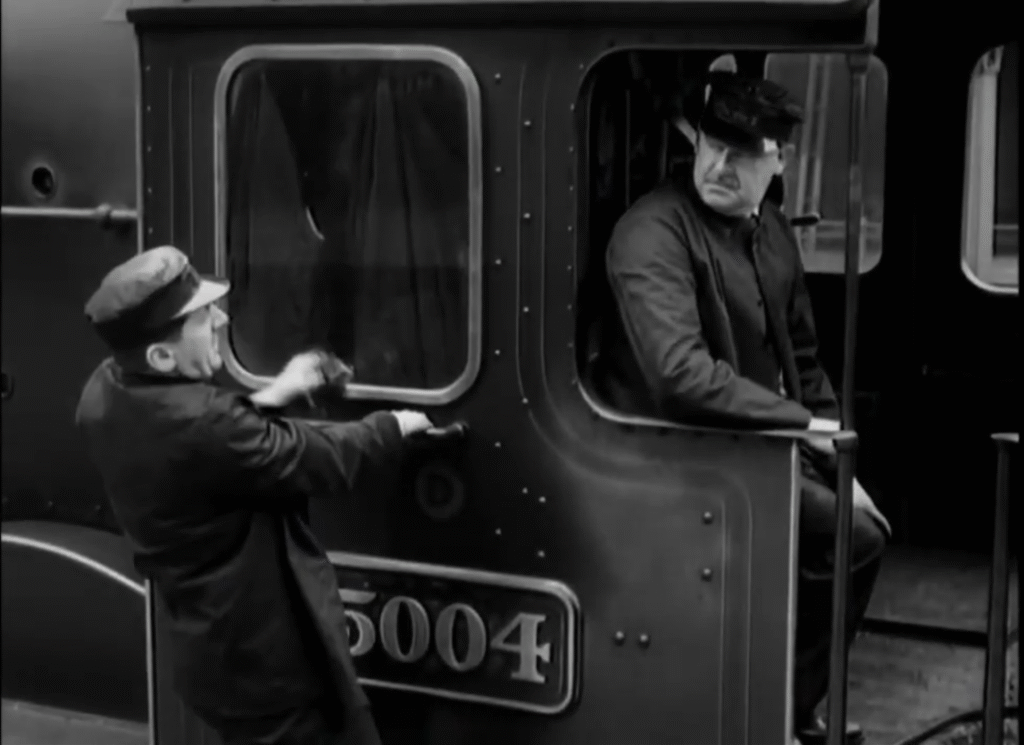
Michael Hogan clings to the outside of Castle’ Class 4-6-0 No.5004 Llanstephan Castle as Julien Mitchell looks on
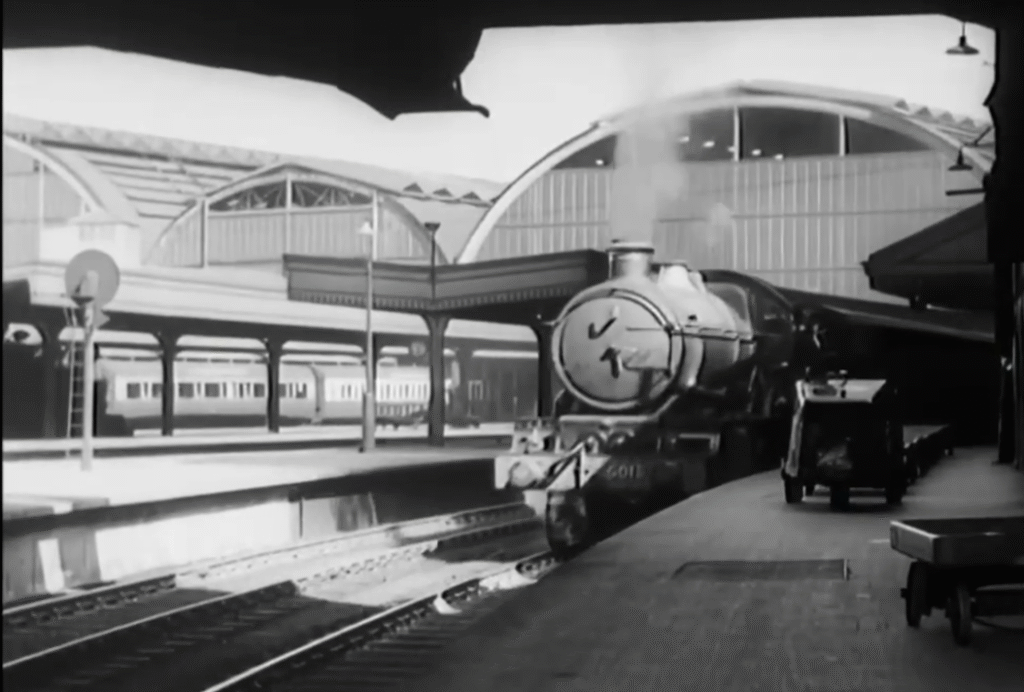
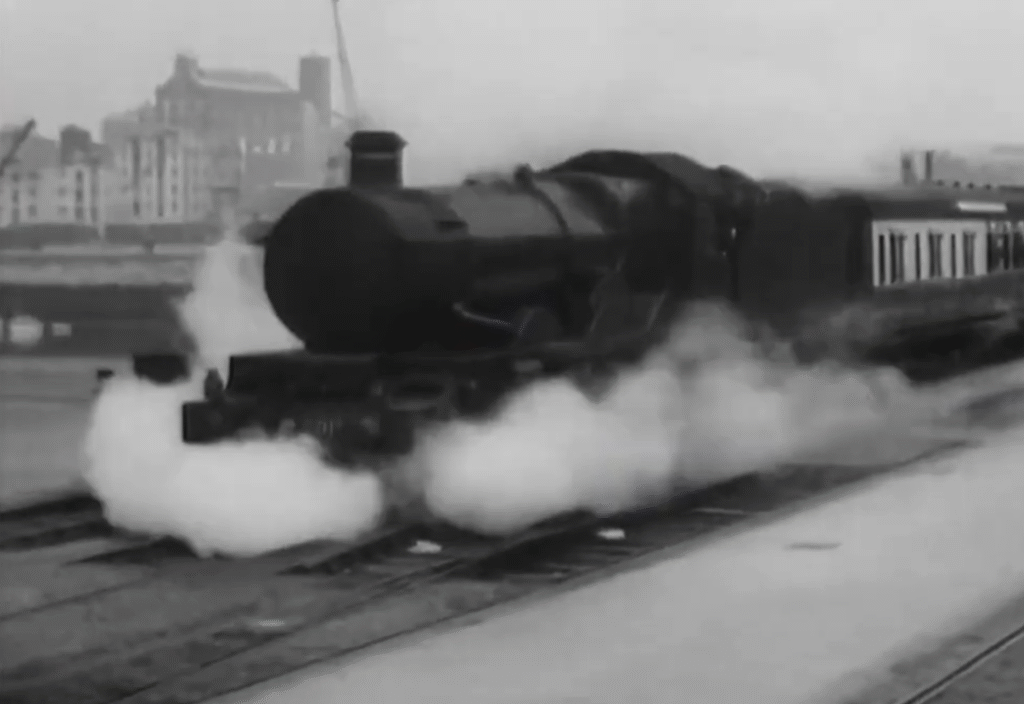
5013 Abergavenny Castle slowly pulls away from platform 1 of Paddington station at the start of its journey
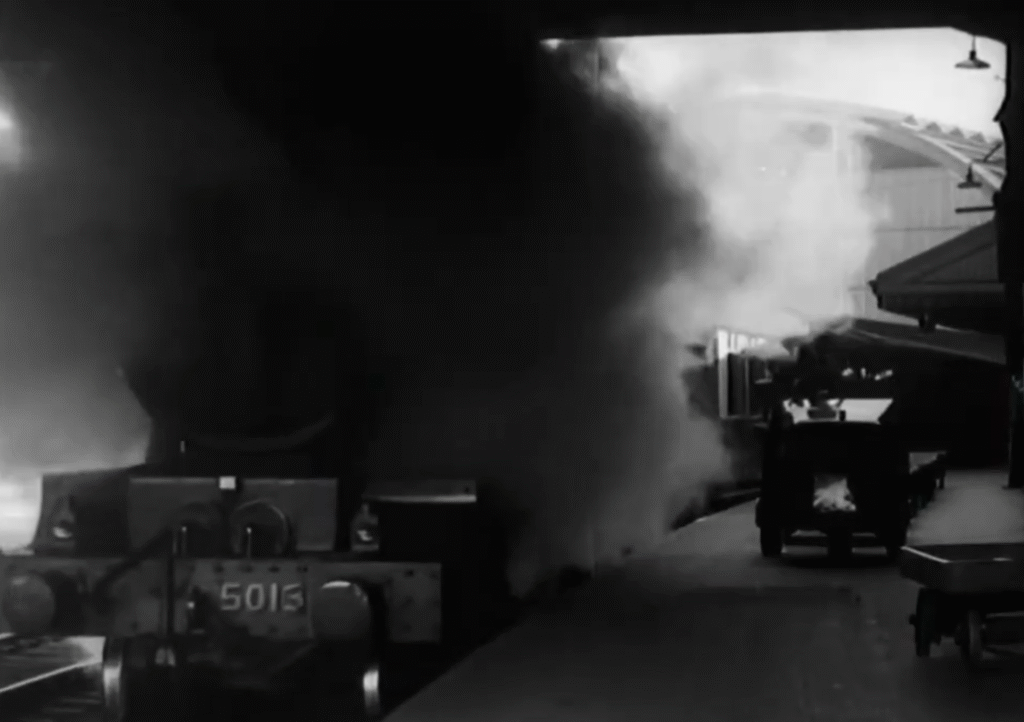
No.5013 is enveloped in steam as its exhaust comes back off the underside of Bishops Bridge. Brilliant stuff.
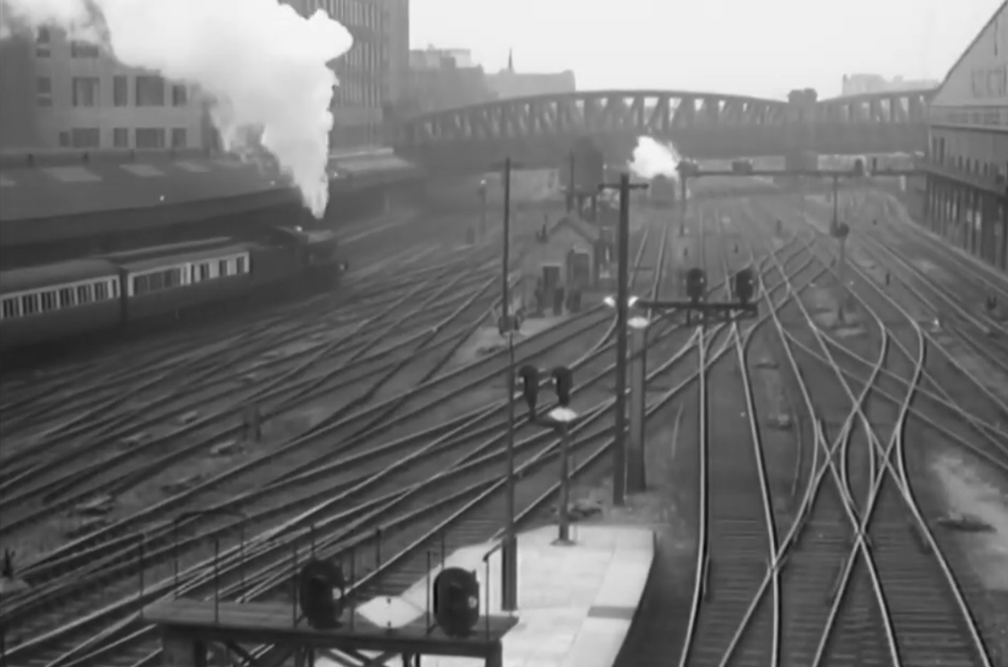
This overall view of the approach to London Paddington holds much of interest. The train is departing from platform 1.
An express passes Ranelagh Bridge at the start of its journey. The houses on Harrow Road are beyond the bridge itself.
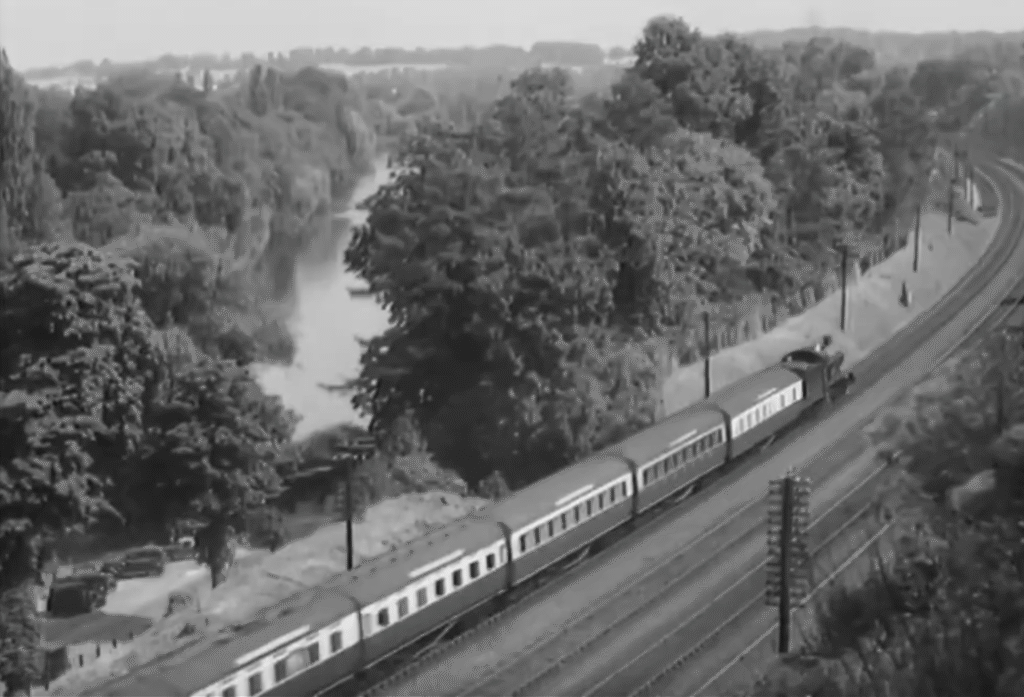
An express passes the River Thames at Shooters Hill between Goring and Pangbourne in Berkshire
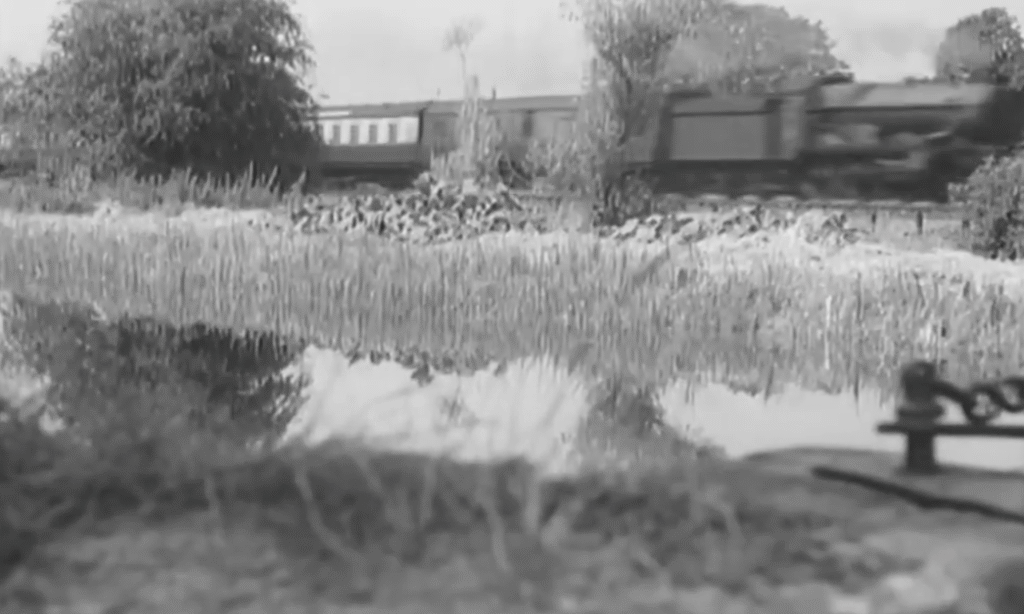
A ‘King’ storms past a lock basin on the Kennet & Avon Canal
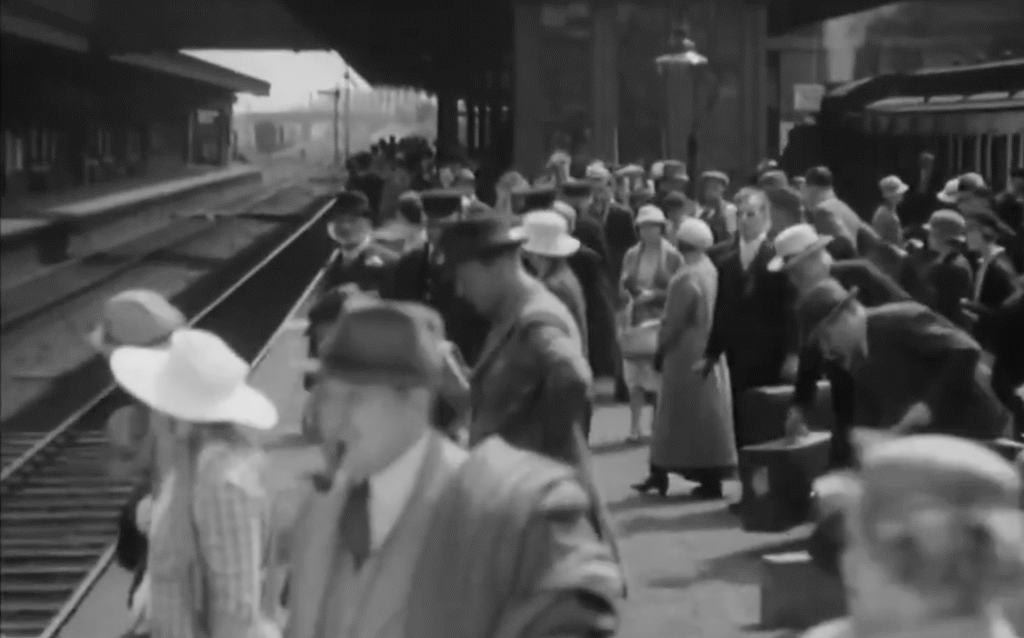
Passengers wait the arrival of the express train that won’t stop. This is Slough station looking east with a Windsor branch train in the bay on the right.
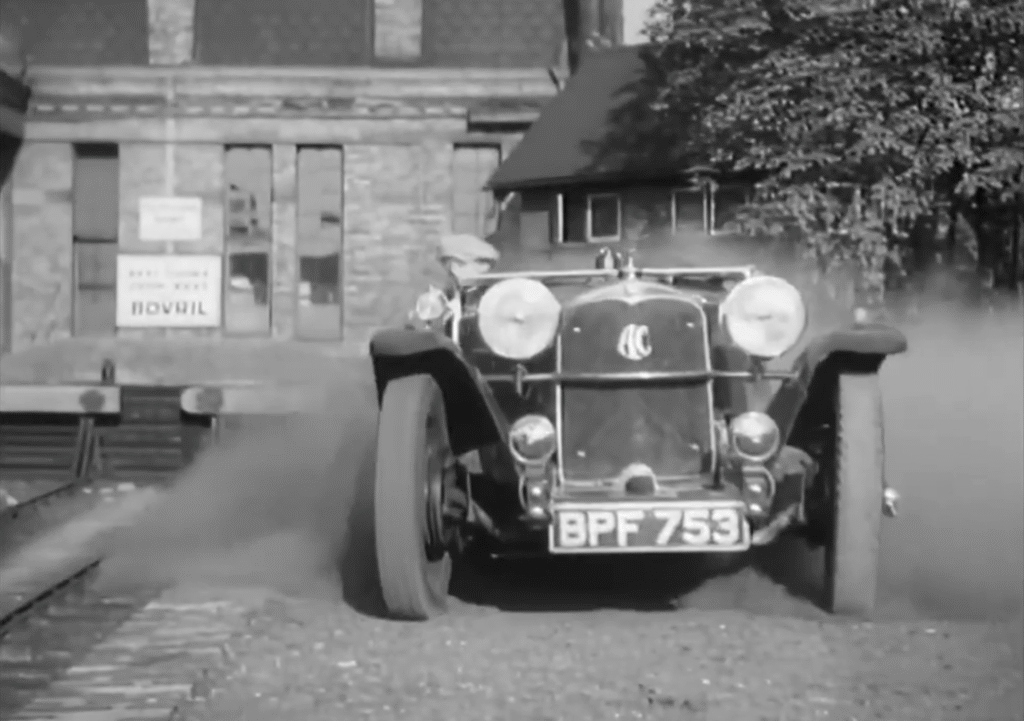
This AC Sports Tourer kicks up dust as it slides to a halt on the goods dock at Slough. This is adjacent to the Windsor branch platform.
This is West Ealing looking east from the now removed former down main platform. The station had an interesting layout whereby the up relief platform was on the opposite side of the bridge due to its traditional position being occupied by the milk depot. The platform is visible through the bridge and was resited in 1991.
Passengers at West Ealing watch on as an express bursts out from under the bridge
A close up of a train passing through West Ealing reveals the loco to be ”Star’ Class 4-6-0 No.4067 Tintern Abbey.
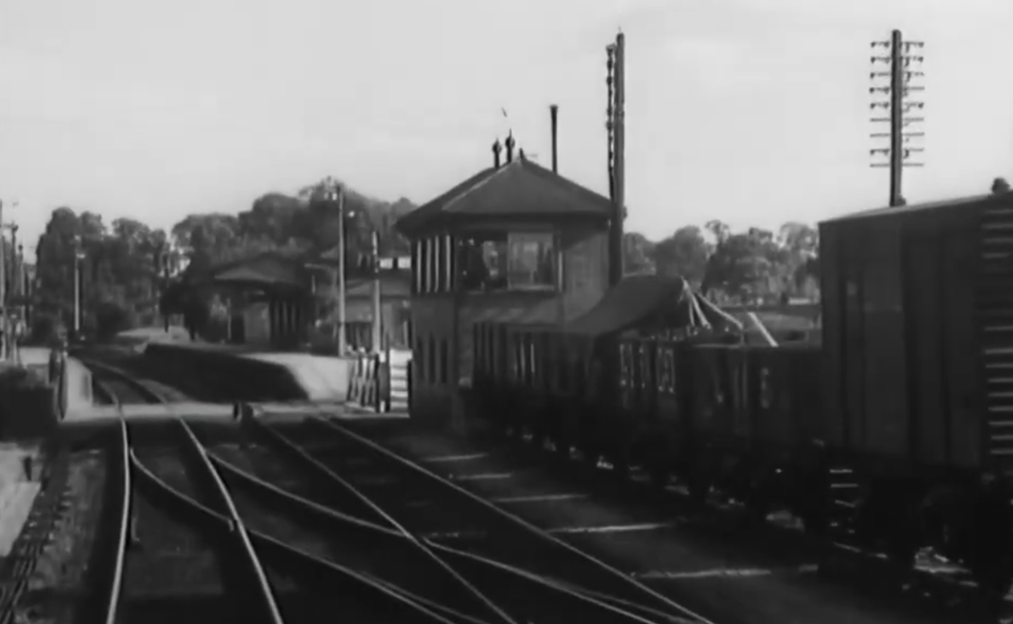
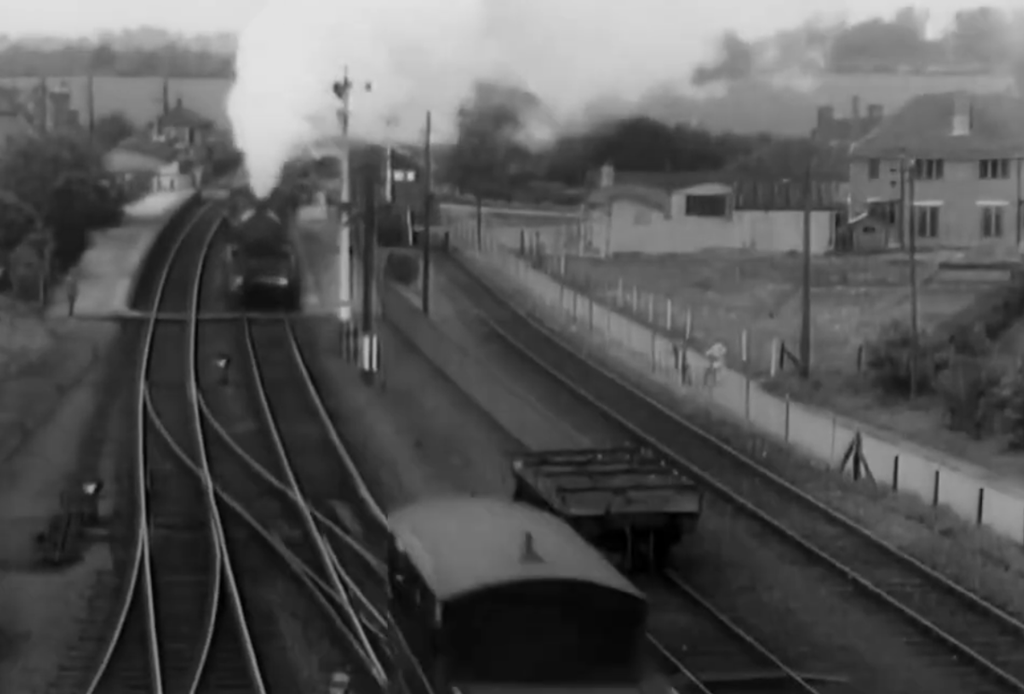
This is Bramley station in Hampshire, located on the busy inter-regional route from Reading to Basingstoke. Note that some of the coal wagons in the siding are branded LMS.
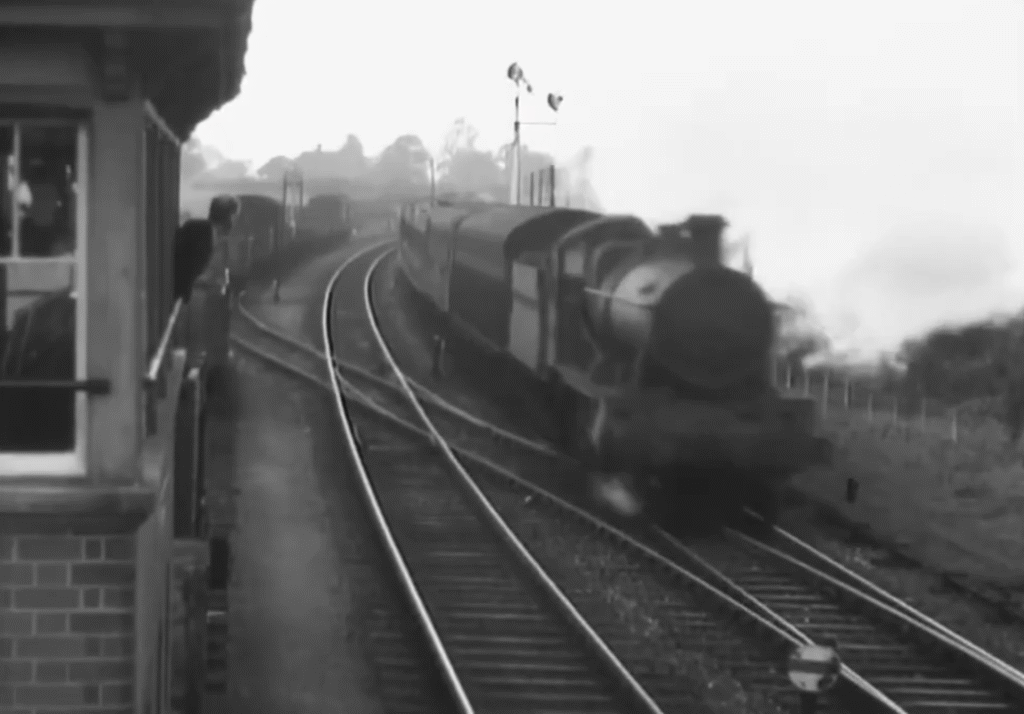
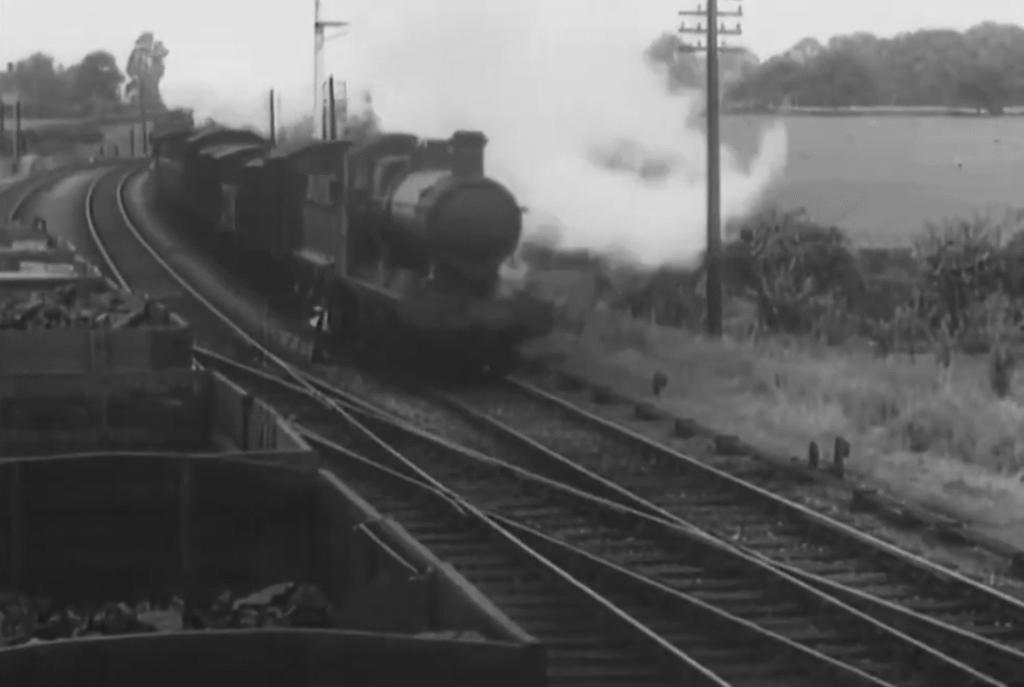
A view from Bramley ‘box as a down train heads towards Basingstoke hauled by a GWR 4300 Class 2-6-0
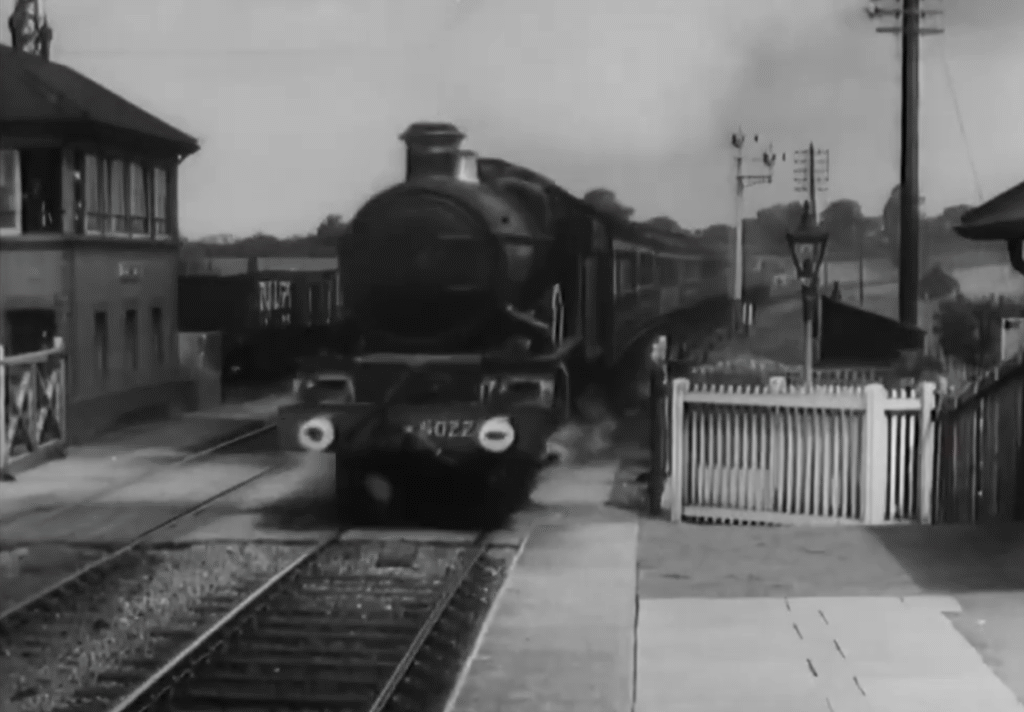
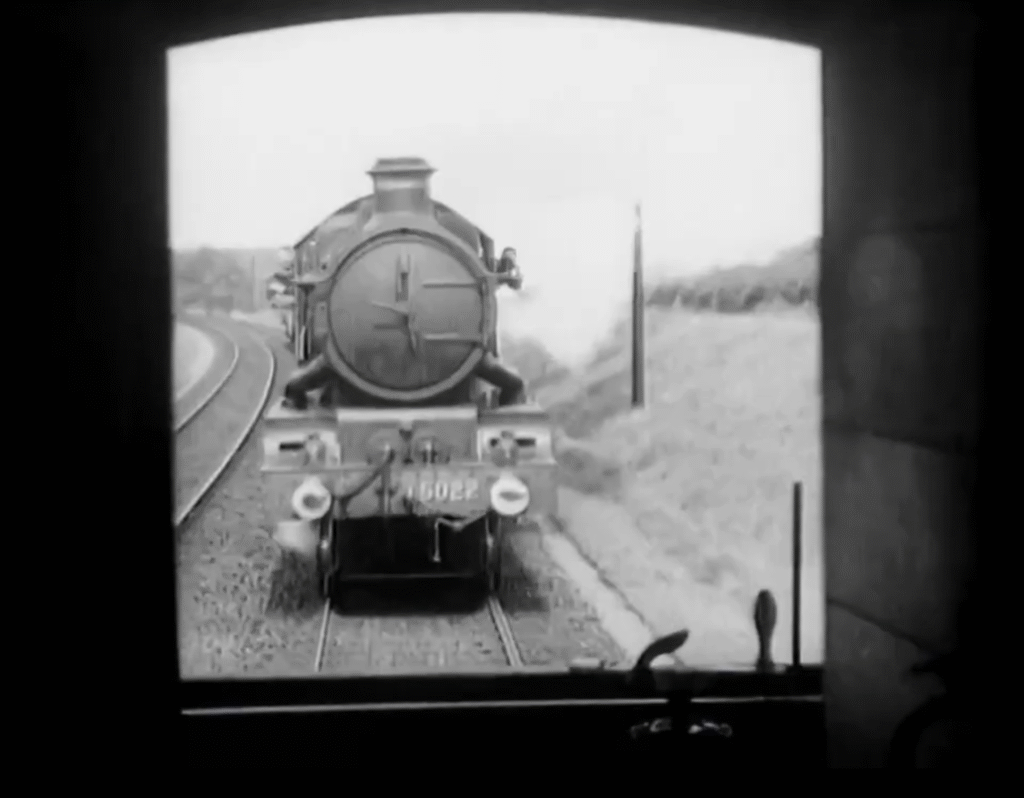
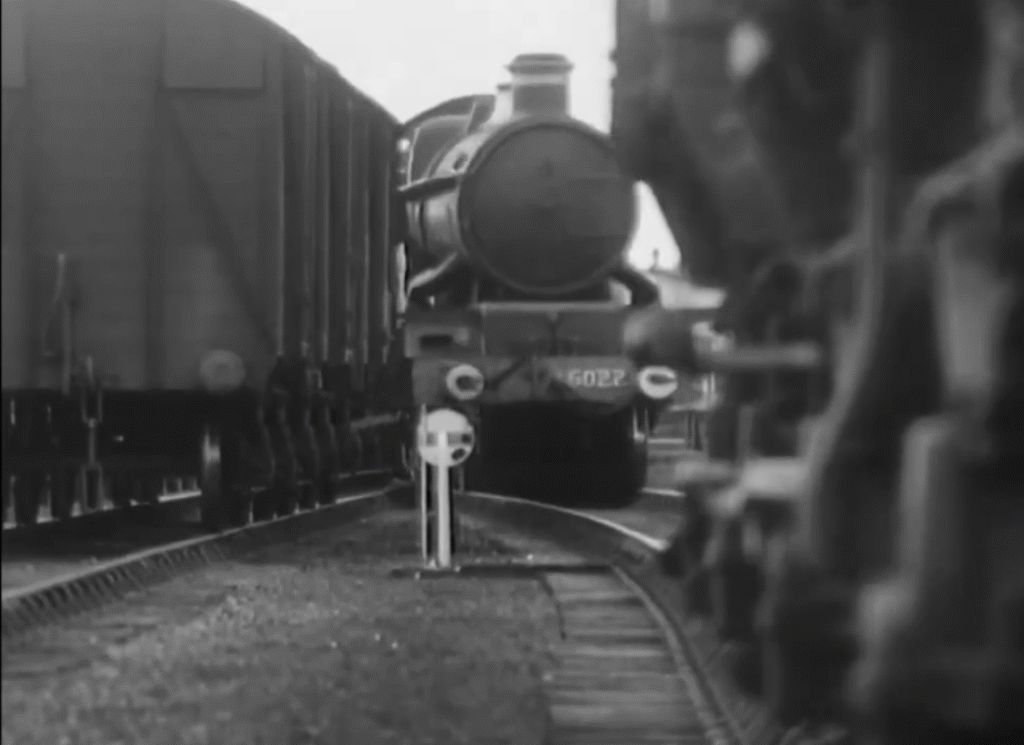
Whereas the goods train suffers from continuity errors surrounding the locomotive and its wagons, the runaway passenger train is the exact opposite, largely using ‘Castle’ Class 4-6-0 No.5022 Wigmore Castle throughout. There are many views of the locomotive during this sequence, here it is seen passing through Bramley.
The first view of the goods train shows it hauled by an 0-6-0 Pannier Tank
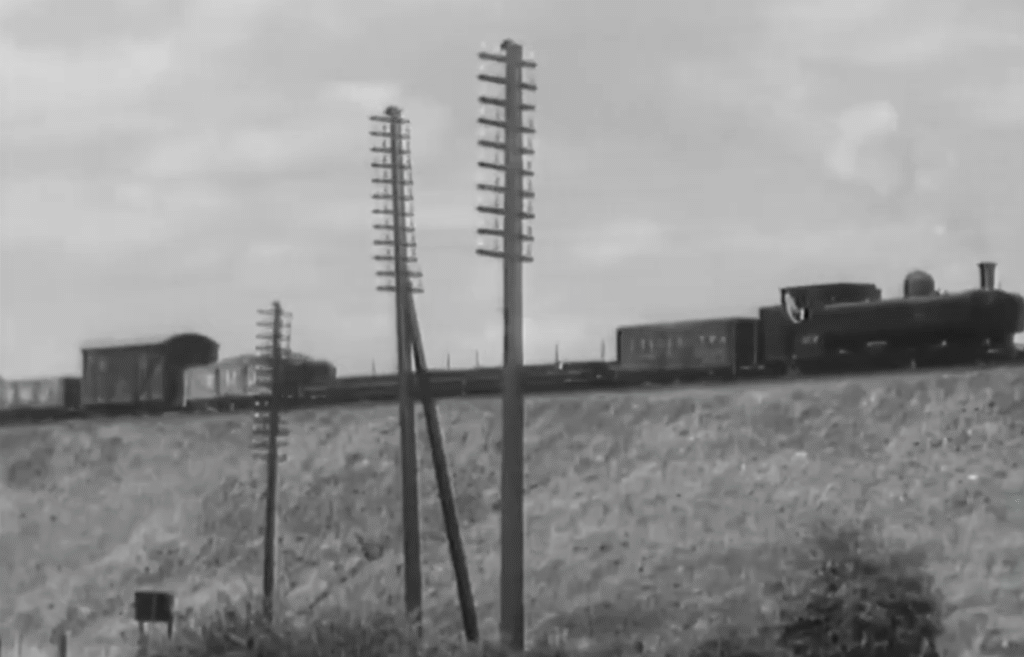
Before then passing Shooters Hill hauled by a GWR 2800 Class 2-8-0. Note the wonderfully mixed assortment of wagons and the unusual positioning of the Toad brakevan three wagons back.
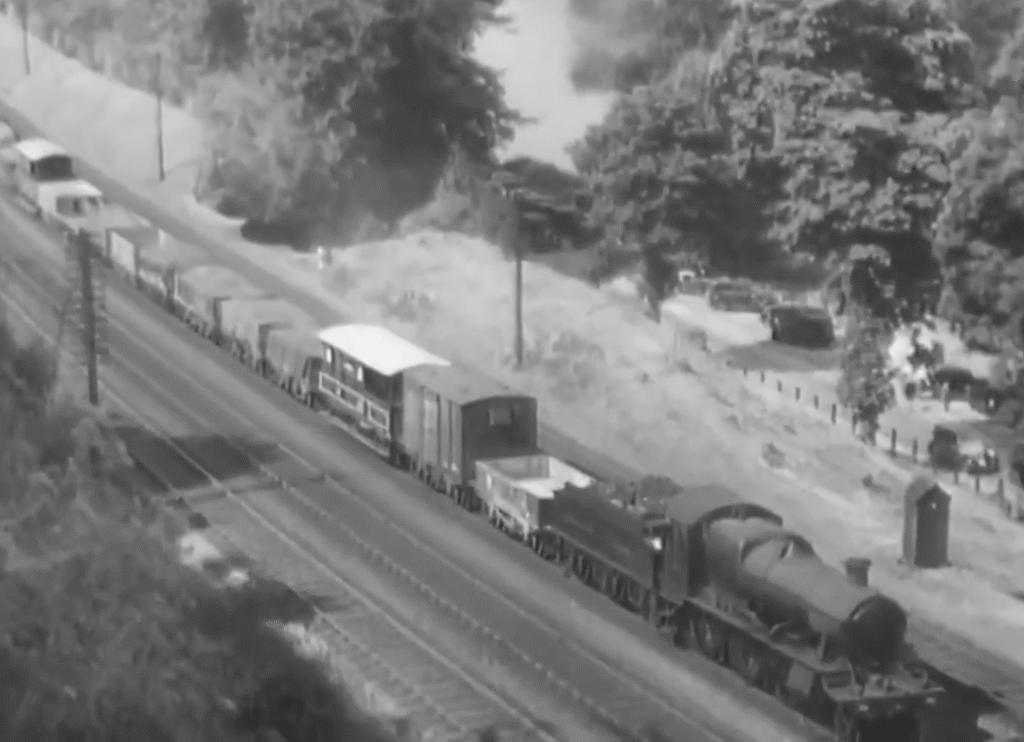
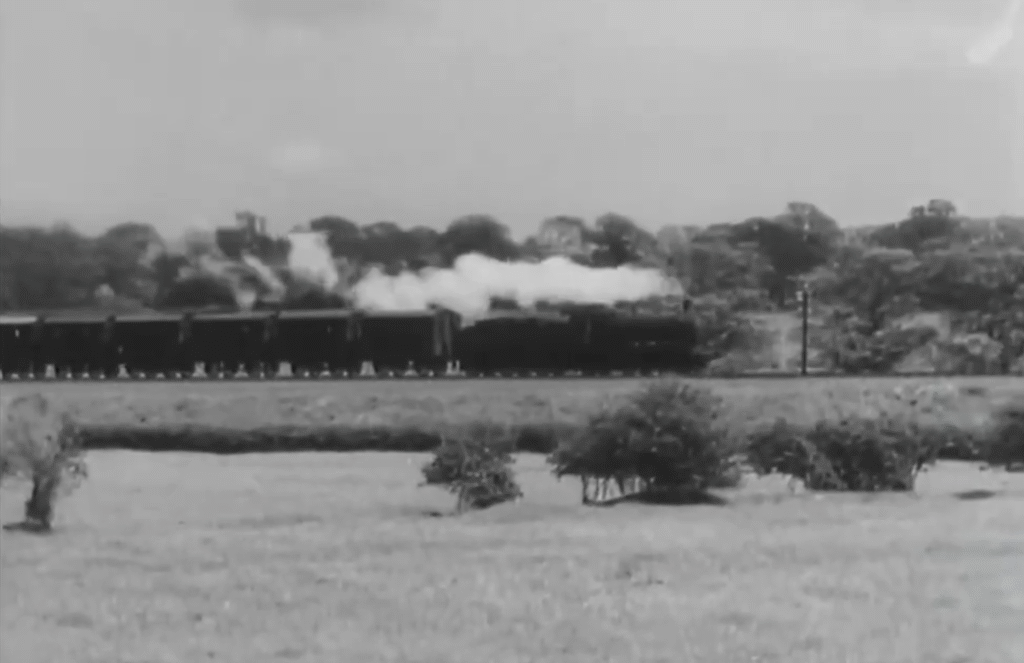
With a wildly differing consist that is now made up of 4-wheeled vans, the freight train plods through the countryside hauled by a 2251 Class 0-6-0.
The goods train now passes Bramley
Where it is quickly being chased down by the fast approaching express
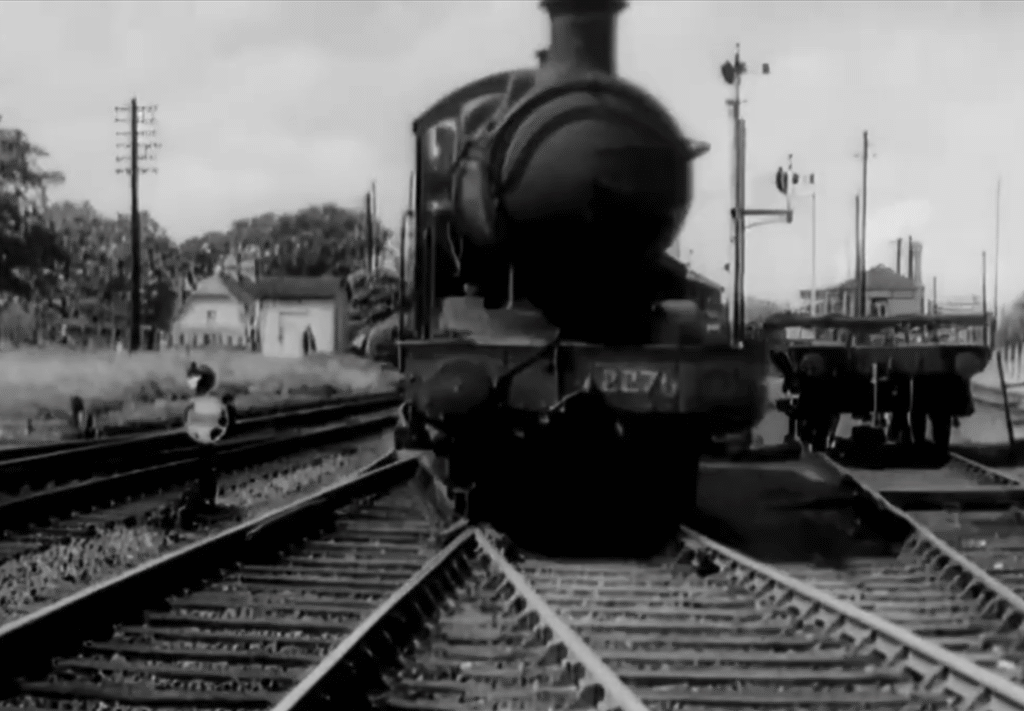
The goods train pulls into a siding at Bramley, revealing the identity of the locomotive to be No.2275. This particular member of the 2251 Class was built in 1934 and was no more than two years old at the time of filming.
There are many artistic shots of No.5022 Wigmore Castle and this is the best, looking out through the rear of the brake van
But this one is just as good
What is probably a GWR 4300 Class 2-6-0 enters a tunnel at speed
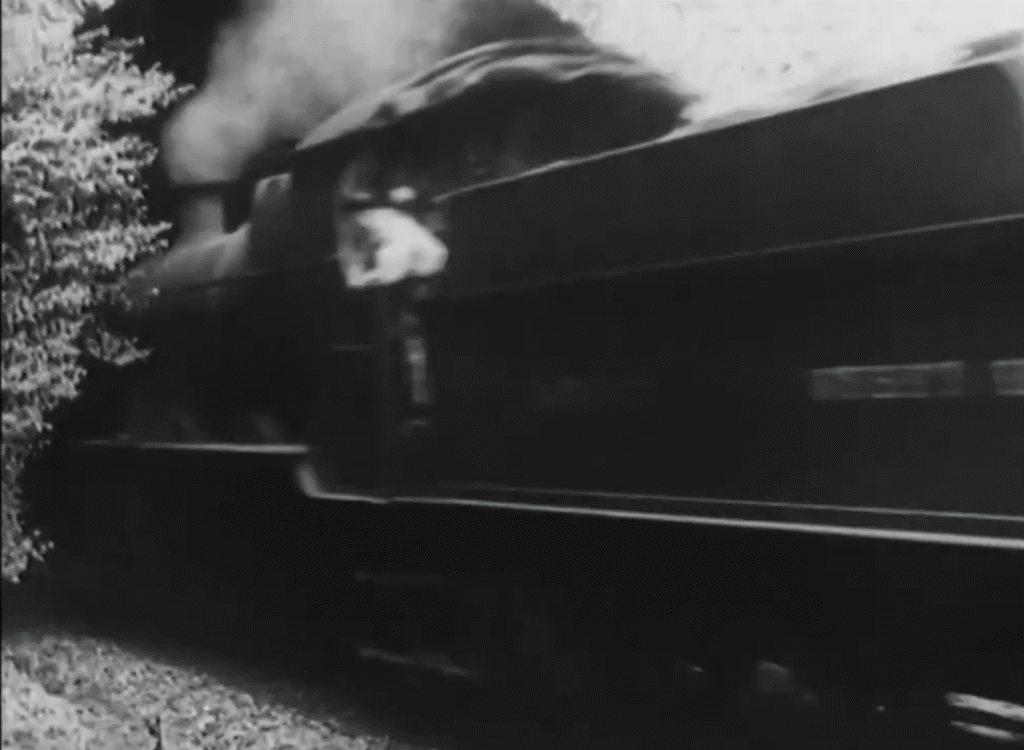
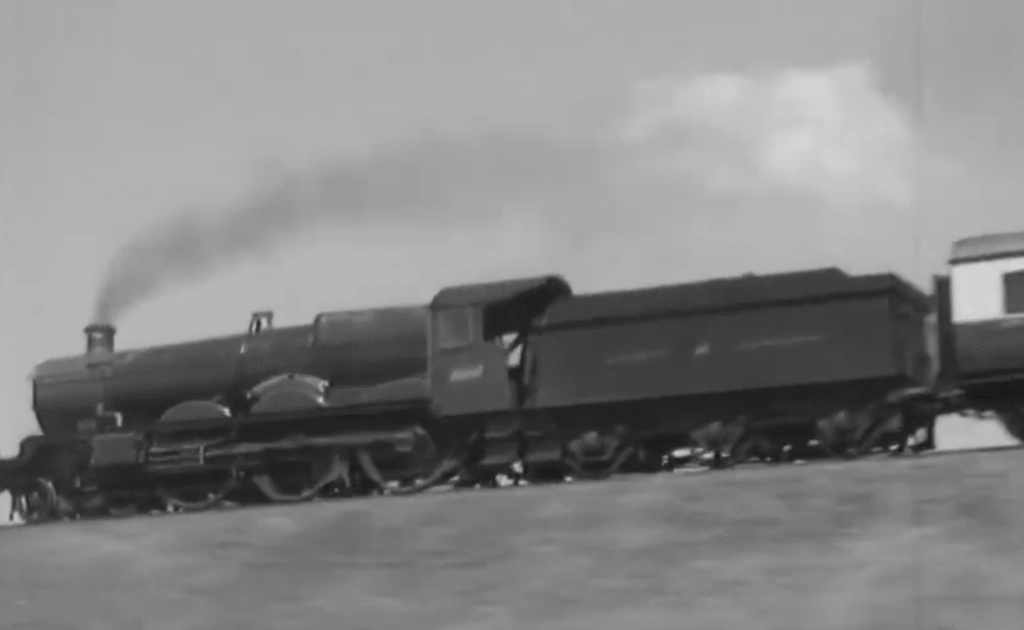
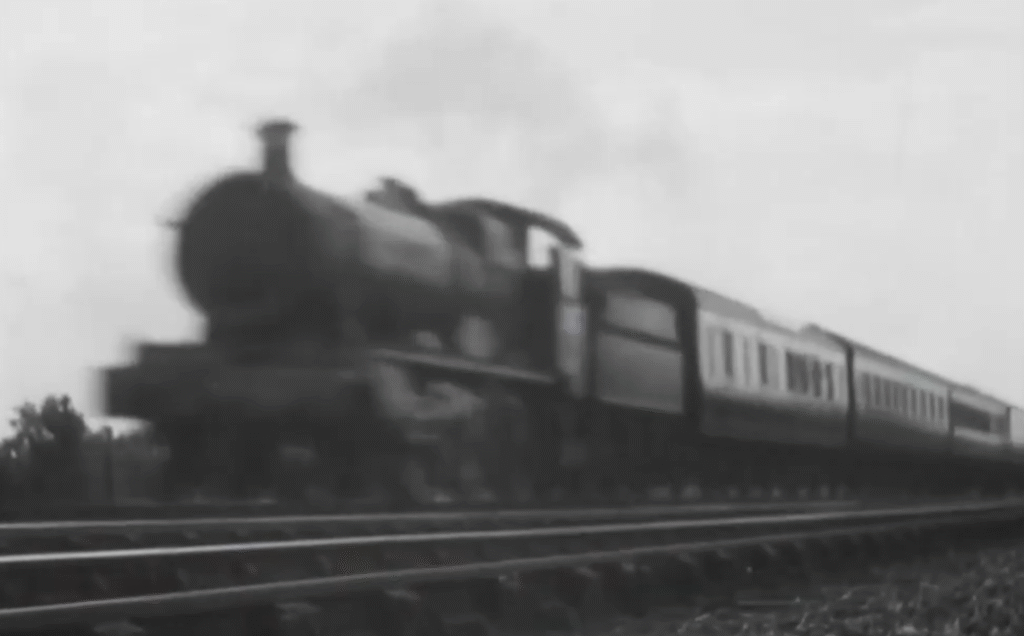
This fine portrayal of a ‘Castle’ Class 4-6-0 is one of many random shots of trains that appear throughout the film
This shot shows another ‘Saint’ on a passenger service
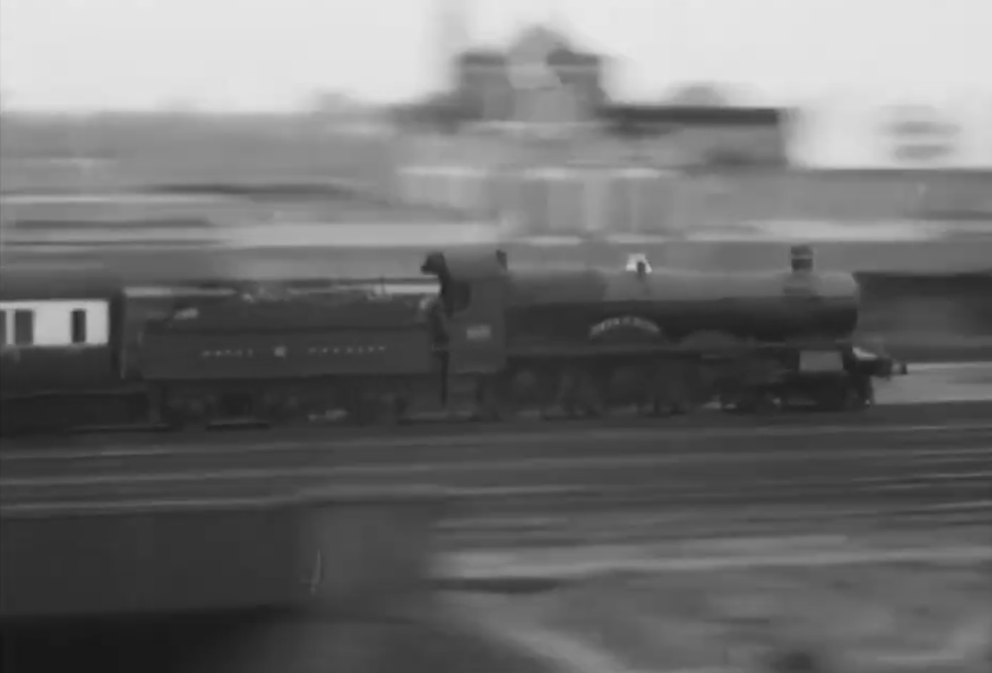
Whilst here we see one passing the camera at speed
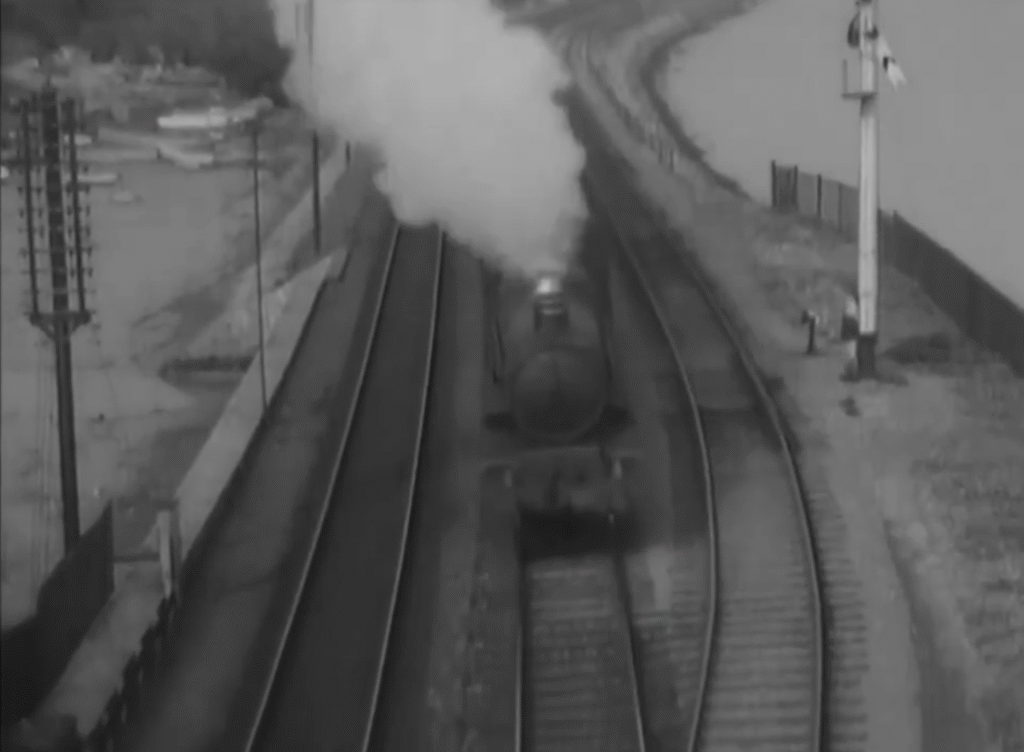
This express train hauled by a GWR 4-6-0 is captured on the approach to Laira Junction, in Plymouth, with the Plym estuary on the right.
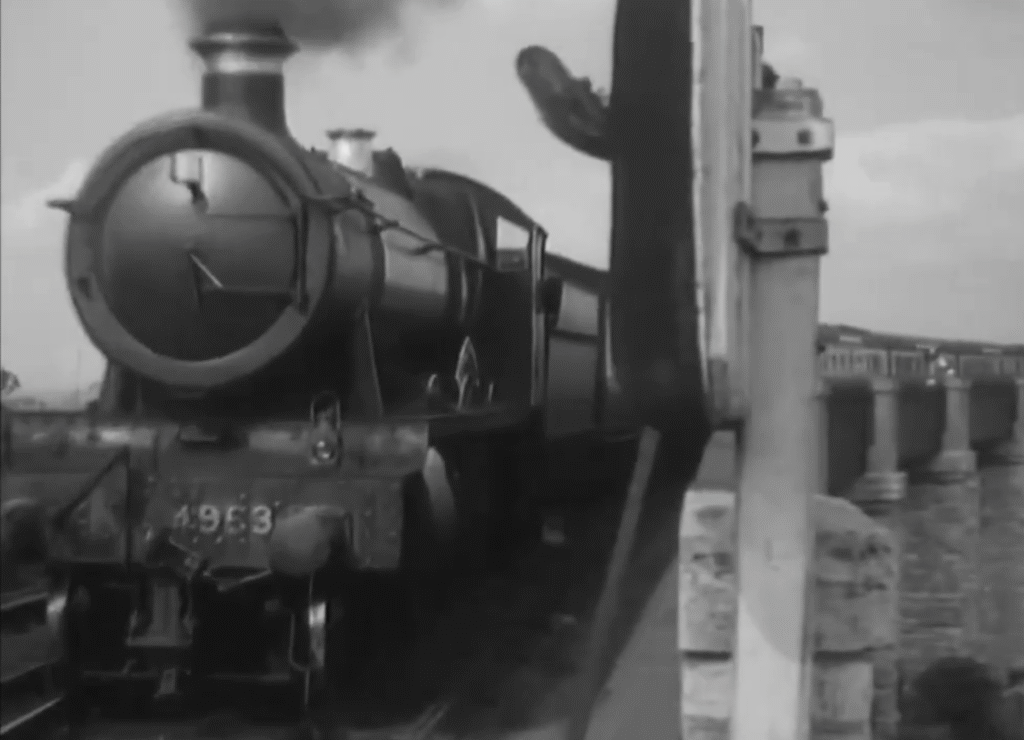
The now preserved 4953 Pitchford Hall rolls off the Royal Albert Bridge and enters Cornwall at Saltash
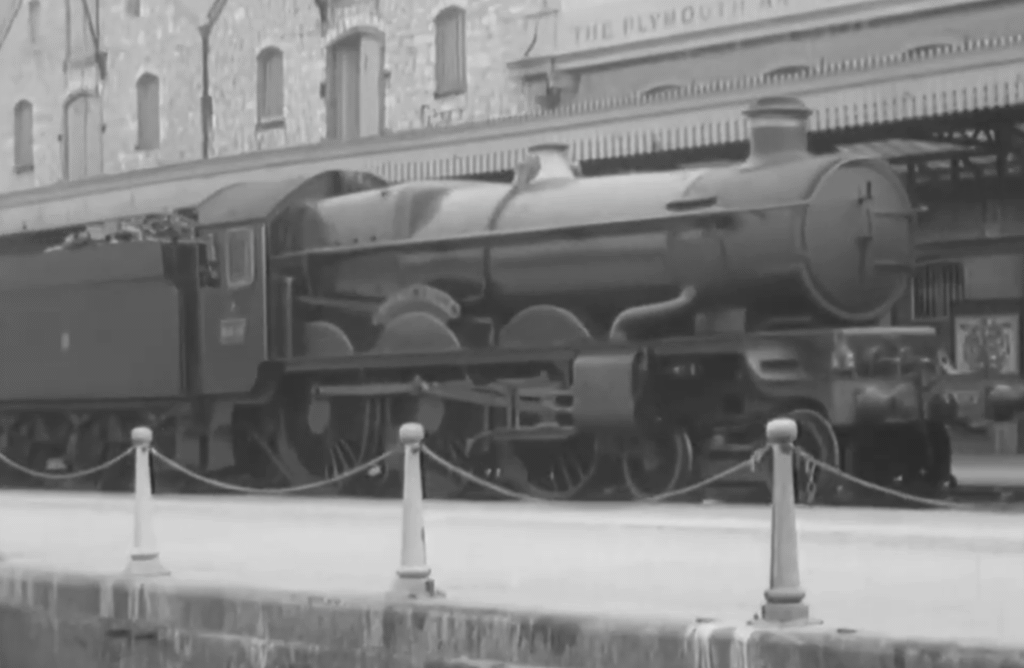
The film ends here at Plymouth Millbay, a very rare location to have been captured on film. This ‘King’ Class loco is easing past the landward end of Trinity Pier in the Outer Basin of Great Western Docks, very close to journey’s end.
This is the passenger plaform at Millbay which was adjacent to Princess Royal and Millbay Piers. It closed to passenger traffic in 1963.
This magnificent shot of a ‘King’ is the last view of a train in the film. Sadly, its identity can not be made out. The stores and warehouses forming the background front Great Western Road in Plymouth.